


Home Care Hire take full responsibility for the safety of the equipment we provide.
However it is the responsibility of the customer to ensure the safe operation of the equipment we provide.
In order to ensure the manufactures safety precautions are met, please read and acknowledge the following safety precautions before ordering.
The equipment we are agreeing to rent is the Oxford Up, the Oxford Journey and/or the Oxford Advance. In accepting these conditions you agree that the equipment will be operated by a fully trained and competent care giver.
Any slings provided will only be operated by full trained/competent care givers.
Oxford Up Safety Precautions Agreement
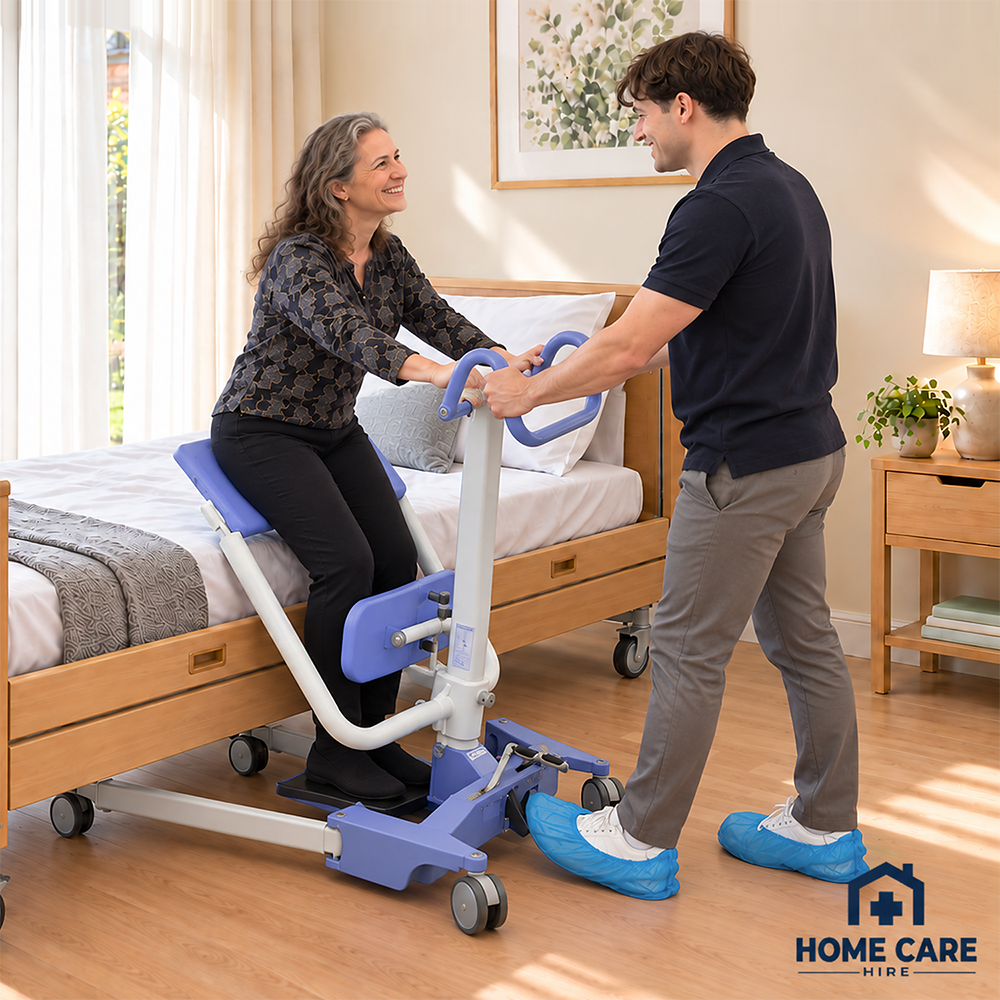
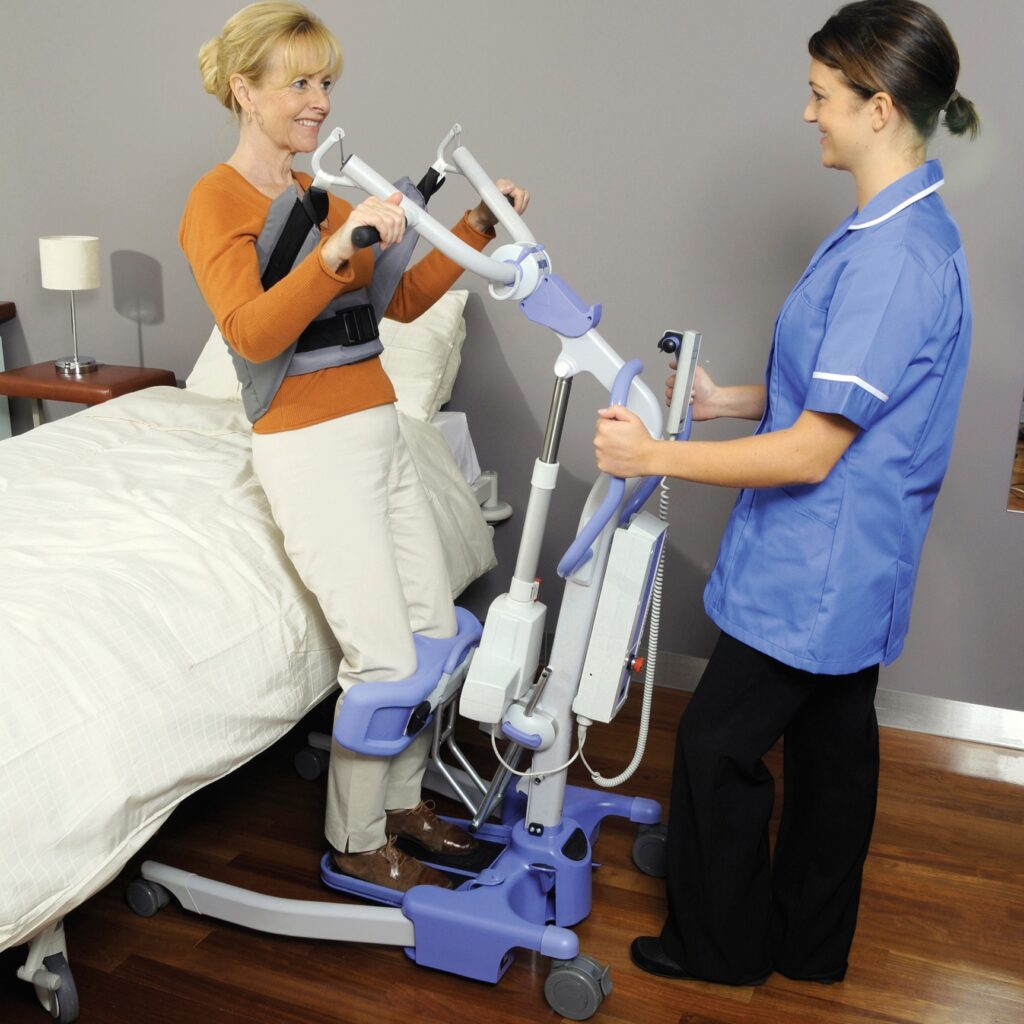
In order to use the Up safely, the patient must display the following abilities:
• Support their own body weight while standing
• Maintain balance for an extended period while standing (with support)
• A firm grip in order to grasp the frame handles for support and stability
• Ability to understand and carry out instruction
The Up is intended for short transfers on flat/even floors.
ALWAYS plan your transfer operations before commencing.
ALWAYS carry out the DAILY CHECK LIST before using this product.
ALWAYS familiarise yourself with the operating devices and safety features of this product before use.
DO NOT use a sling or belt unless it is recommended for use with the device.
ALWAYS check the sling/belt is suitable for the particular patient and is of the correct size and capacity.
NEVER use a sling/belt which is frayed or damaged.
ALWAYS fit a sling/belt according to the user instructions provided.
ALWAYS check the safe working load of the product(s) is/are suitable for the weight of the patient.
ALWAYS carry out transfers according to the instructions in the user manual.
NEVER attempt to bypass a safety feature because it seems easier to operate the product.
NEVER force an operating or safety device. All devices are easy to use and do not require excessive force to operate. If a device is not working easily there will be a reason. Forcing will only strain or damage the product and may compromise safety.
To avoid inadvertent contact with the rear braked castors during transfer, and possible injury, ENSURE the patient’s feet are correctly positioned on the footplate.
ALWAYS apply both brakes after positioning the Up into position in front of the patient prior to asking them to stand.
When transferring to or from a wheeled/movable surface such as a commode, wheel chair or bed, ensure the brakes (of that surface) are applied to avoid any inadvertent movement and ensure a safer, more stable transfer.
DO NOT attempt to manoeuvre the device by pushing on the patient.
ALWAYS manoeuvre the device using the handle provided. DO NOT attempt to apply side force to the base or frame of the device in order to manoeuvre.
DO NOT push a loaded device at speeds exceeding a slow walking pace (3 kilometres/ hour 0.8 metres/second).
DO NOT push the device over wet surfaces, uneven or rough ground or surfaces littered with debris, particularly when loaded.
DO NOT attempt to push or pull a loaded device over a floor obstruction of which the castors are unable to ride over easily.
DO NOT bump the device down steps, loaded or unloaded.
DO NOT attempt to negotiate a loaded device on a slope which exceeds 1:12 (approximately 5 degrees). Joerns Healthcare recommend a second helper is present when moving a patient on a slope.
DO NOT park a loaded device on ANY sloping surface.
DO NOT transfer a patient unless you are trained and competent to do so.
Your device is for patient standing and transfers. DO NOT use it, or allow it to be used, for any other purpose.
DO NOT use this product for self transfers; a patient must always be assisted by caregiver(s).
ENSURE the caregiver(s) wear appropriate footwear when using this product.
locations.
Oxford Journey Safety Precautions Agreement
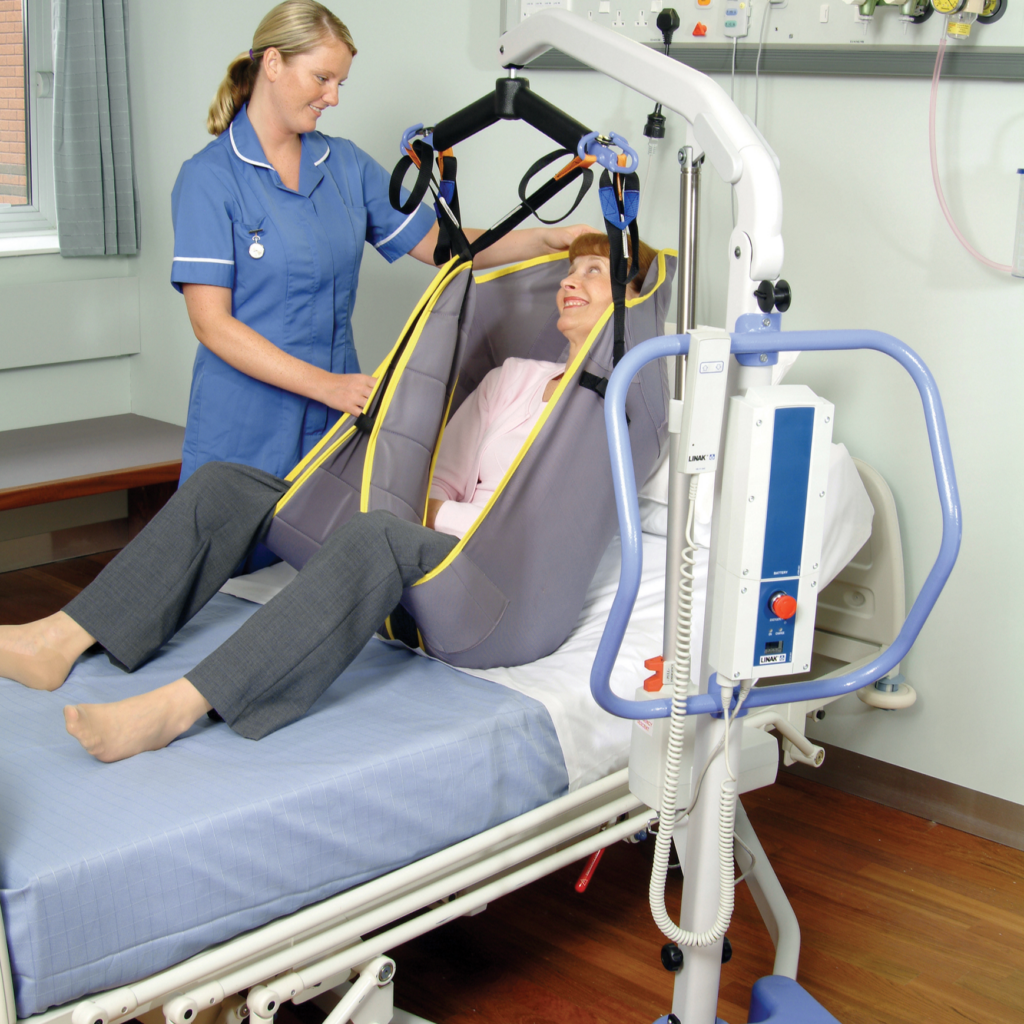
Oxford patient lifts should only be operated by full trained/competent care givers.
ALWAYS plan your lifting operations before commencing.
ALWAYS carry out the DAILY CHECK LIST before using the lift.
ALWAYS familiarise yourself with the operating control and safety features of a lift before lifting a patient.
DO NOT use a sling unless it is recommended for use with the lift.
ALWAYS check the sling is suitable for the particular patient and is of the correct size and capacity.
NEVER use a sling, which is frayed or shows signs of damage.
ALWAYS fit the sling according to the instructions provided (user instructions).
DO NOT exceed the safe working load.
ALWAYS check the safe working load of the lift is suitable for the weight of the patient.
ALWAYS carry out lifting operations according to the instructions in the user manual.
NEVER disconnect or bypass a control or safety feature because it seems easier to operate the lift.
DO NOT attempt to manoeuvre the lift by pushing on the mast, boom or patient.
ALWAYS manoeuvre the lift with the handle / foot push pad provided.
ALWAYS lower the patient to the lowest comfortable position before transfers.
DO NOT push a loaded lift at speed, which exceeds a slow walking pace (3 Km/hour 0.8 metres/second).
DO NOT push the lift over uneven or rough ground. Particularly if loaded.
DO NOT attempt to push/pull a loaded lift over a floor obstruction.
NEVER force an operating/safety control. All controls are easy to use and do not require excessive force.
The MINIMUM load required to manually lower the hoist using the mechanical emergency down function is 30 kg
DO NOT park a loaded lift on ANY sloping surface.
DO NOT use electric lifts in a shower.
DO NOT charge an electric lift in a bathroom or shower room.
DO NOT lift a patient unless you are trained and competent to do so.
DO NOT use the lift, or allow the lift to be used, for any other purpose.
DO NOT bump the lift down steps, loaded or unloaded.
DO NOT attempt to negotiate a loaded lift on a slope, which exceeds 1:12 (approximately 5 degrees).
DO NOT attempt to negotiate a slope without a second helper being present.
DO NOT use in a wet or corrosive environment such as poolside
Oxford Advance Safety Precautions Agreement
Oxford patient lifts should only be operated by fully trained/competent care givers.
ALWAYS plan your lifting operations before commencing.
ALWAYS carry out the DAILY CHECK LIST before using the lift.
ALWAYS familiarise yourself with the operating control and safety features of a lift before lifting a patient.
DO NOT use a sling unless it is recommended for use with the lift.
ALWAYS check the sling is suitable for the particular patient and is of the correct size and capacity.
NEVER use a sling, which is frayed or damaged.
ALWAYS fit the sling according to the instructions provided (user instructions).
ALWAYS check the safe working load of the lift is suitable for the weight of the patient.
ALWAYS carry out lifting operations according to the instructions in the user manual.
NEVER disconnect or bypass a control or safety feature because it seems easier to operate the lift.
DO NOT lift a patient with the castor brakes on. Always let the lift find the correct centre of gravity.
DO NOT attempt to manoeuvre the lift by pushing on the mast, boom or patient.
ALWAYS manoeuvre the lift with the handle provided.
ALWAYS lower the patient to the lowest comfortable position before transfers.
DO NOT push a loaded lift at speeds, which exceed a slow walking pace (3 Kilometers/hour 0.8 meters/second).
DO NOT push the lift over uneven or rough ground, particularly when loaded.
DO NOT attempt to push/pull a loaded lift over a floor obstruction, which the castors are unable to ride over.
NEVER force an operating/safety control. All controls are easy to use and do not require excessive force.
The MINIMUM load required to manually lower the hoist using the mechanical emergency down function is 30 kg.
DO NOT use electric lifts in a shower.
DO NOT charge an electric lift in a bathroom or shower room.
DO NOT lift a patient unless you are trained and competent to do so.
YOUR lift is for patient lifting. DO NOT use it, or allow it to be used, for any other purpose.
DO NOT bump the lift down steps, loaded or unloaded.
DO NOT attempt to negotiate a loaded lift on a slope, which exceeds 1:12 (approximately 5 degrees).
DO NOT attempt to negotiate a slope without a second helper being present.
ALWAYS check the hoist is not charging before moving as the electrical connection may be damaged.